
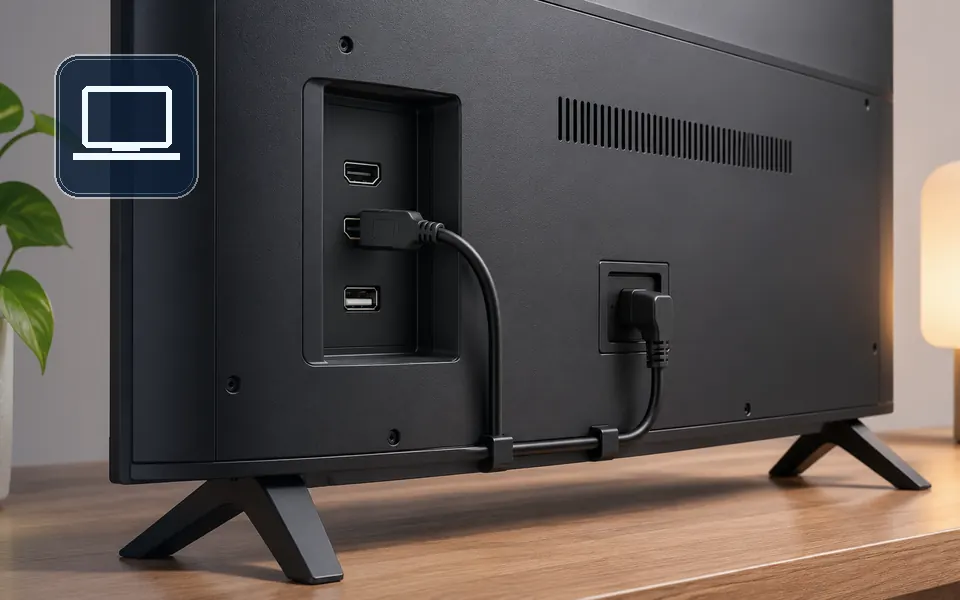
Choose the connection for the task.
- HDMI on the computer
- Connect directly to the TV. Check the supported resolution and refresh rate for both devices and the cable.
- USB-C, Thunderbolt or DisplayPort
- Use a compatible video adapter with the correct direction and capabilities. A USB-C port is not automatically a display output.
- Wireless presentation
- Use Miracast or AirPlay only when the computer and receiver support the same method. Wireless convenience can come with latency or app restrictions.
Make the desktop visible before tuning it.
Identify the output and adapter
Check the computer's exact port specification. If using a desktop with a dedicated graphics card, use the intended active display output. For an adapter or dock, verify its resolution and refresh support as well as the computer's. Avoid assuming every connector of the same shape has identical capabilities.
Connect and select the TV input
Run HDMI from the computer or adapter to the television and note the input number. Turn on the TV, choose that input and wake the computer. Start with one direct connection to simplify diagnosis before adding receivers, switches or long cable runs.
Choose the desktop arrangement
On Windows 11, press Windows+P and choose Duplicate to show the same desktop or Extend to use another workspace. In macOS, open System Settings and Displays to configure the TV and arrangement. An extended desktop may initially show only wallpaper until you move a window onto it.
Set resolution and audio deliberately
In display settings, choose a mode supported by the entire connection. If text is too small, adjust scaling rather than immediately lowering resolution. Select the TV or HDMI device in the computer's sound-output settings. Check mute and volume at both ends.
Try wireless only with matching support
For Windows 11 and a Miracast receiver, enable the TV's receiving mode, press Windows+K and select it. For a Mac, use the supported AirPlay display route with an appropriate receiver. Follow on-screen approval prompts and disconnect when finished. A Cast-enabled TV is not automatically a Miracast display.
Find the symptom. Check the cause.
The TV says no signal
Check the selected input, computer output and adapter power if required. Try a supported basic display mode and a direct connection. For a desktop, confirm you are connected to an active graphics output rather than an unused motherboard socket.
The edges of the desktop are cut off
Look for the TV's screen-fit, just-scan or equivalent setting, and use a documented PC input mode if available. Check the computer's display scaling and overscan controls. Do not compensate for cropping by accepting unreadably small text.
The desktop appears but sound stays on the laptop
Select the TV or HDMI audio device in the computer's output settings. If it is missing, check the adapter's audio capability and reconnect the display. A video-only conversion path may require a separate audio connection.
Refresh rate is a whole-connection limit.
The computer, output port, adapter, cable and television input must support the requested mode. A TV advertising a high refresh rate does not make an older adapter output that mode. Check the actual display settings after connecting.
For games, try the TV's Game or PC mode as documented and compare responsiveness. For protected films, the app and complete connection must support the required playback protection. If you only need a phone video, our phone streaming guide may provide a simpler route.
Checks that make this work.
Pick a display route that fits the task
An HDMI cable can provide a straightforward picture and sound path when the computer and TV have compatible ports. A USB-C socket does not guarantee video output; check the computer's specifications before buying an adapter. Wireless mirroring can be convenient for a presentation but may have delay or network requirements. Windows and macOS expose different display menus, so follow the platform's own directions. Microsoft's display guidance and Apple's external-display help provide platform-specific steps.
Set the display mode deliberately
After connecting, choose duplicate for the same image on both screens or extend when the TV should be another workspace. Select an appropriate resolution and refresh rate supported by both the computer output and TV input. If the picture appears but sound remains on the laptop, change the computer's audio output separately. A TV used for text may need a suitable picture mode to avoid overscan or excessive sharpening. Test one known working cable and input before changing many settings. The computer's exact graphics output, adapter and TV model determine the available modes.
Model-aware instructions.
This guide is based on manufacturer and platform support material reviewed on November 4, 2026. We distinguish common steps from model-specific requirements and link relevant official guidance in the FAQs.
Menu names, app interfaces and supported features can change. Use the manual for your exact model when it differs from a general procedure. This is researched guidance, not a claim that we tested every television, app or accessory described.
A little more clarity.
Can I use a TV as a computer monitor?
Yes, with a compatible video connection and supported display mode. Check text readability, scaling, input delay and the distance you will sit from it. A television designed for sofa viewing may not feel comfortable at a normal desk distance.
What is the difference between Duplicate and Extend?
Duplicate shows the same desktop on both displays. Extend creates additional workspace, so a window may need to be moved onto the TV. Microsoft's display-mode guidance explains the Windows options and wireless connection route.
How do I connect a Mac without an HDMI port?
Use a compatible adapter for the Mac's supported display port, then connect HDMI to the TV. Apple's HDMI connection guide explains port and model differences. Verify the adapter's supported resolution, refresh rate and audio capabilities before purchase.
Does Windows+K work with every smart TV?
No. Windows wireless display needs a compatible receiver, commonly Miracast. A TV supporting only another protocol may not appear. Check both devices' documentation, enable the appropriate receiving mode or use a compatible wired connection instead.
Why is text blurry even though video looks fine?
Check native resolution, scaling, screen-fit settings and any documented PC mode. TVs can apply processing that suits video but softens desktop text. Also verify that the adapter and connection are carrying the intended display mode rather than a lower-resolution fallback.
Can I close the laptop lid while using the TV?
It depends on the computer's power settings and supported external-display operation. Closing the lid may put it to sleep. Configure the documented mode for your device, provide required power and peripherals, and keep ventilation unobstructed.
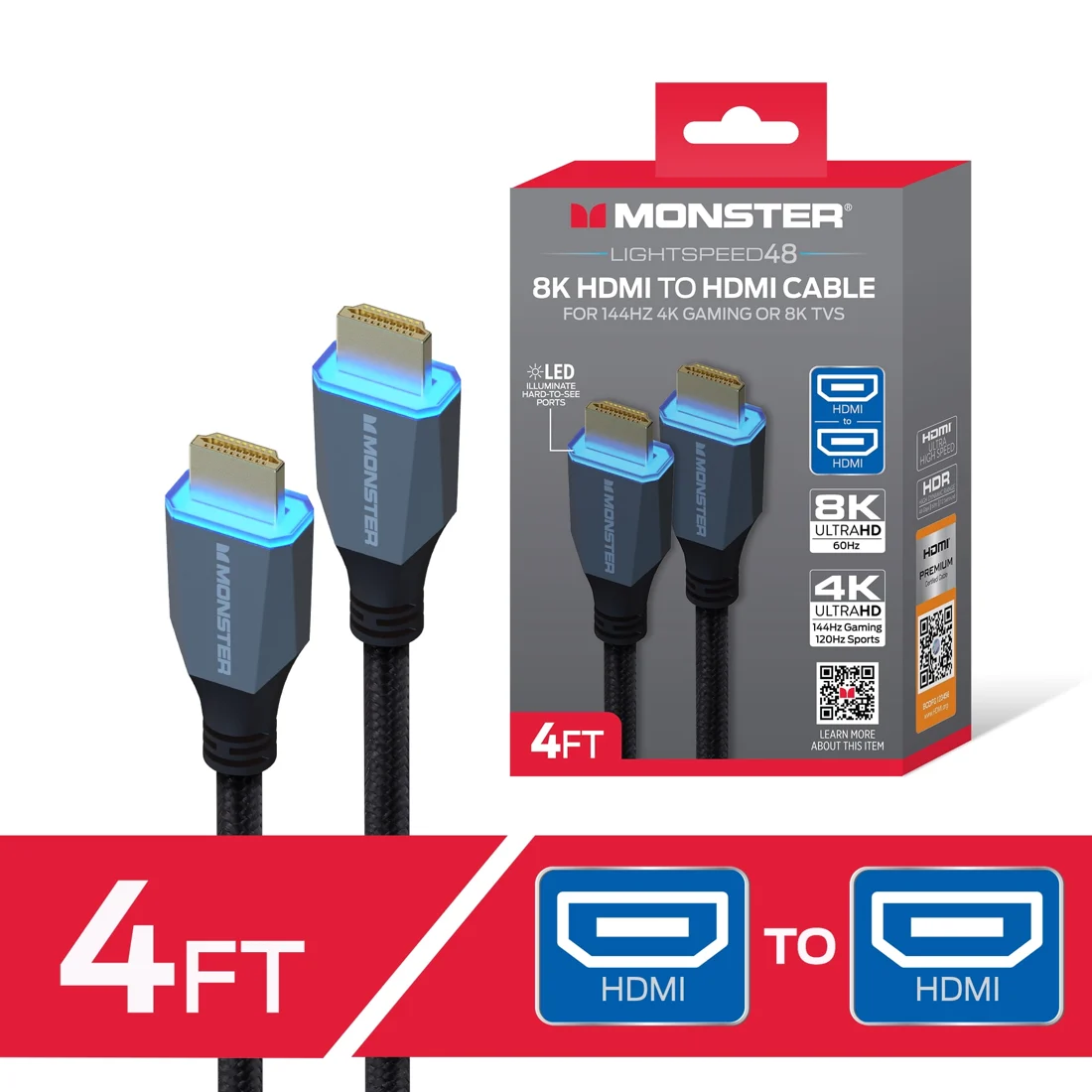 Choose an HDMI connection
 Connect a phone instead
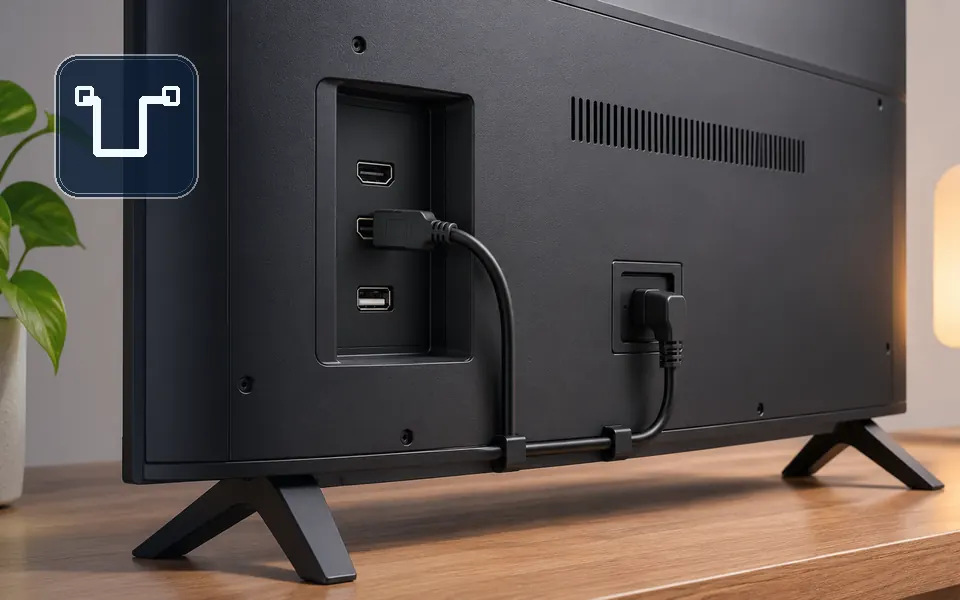 Keep the cables organized